Vendors, clients and the route
Who carried the work, who it was really for, and how a company has actually behaved.
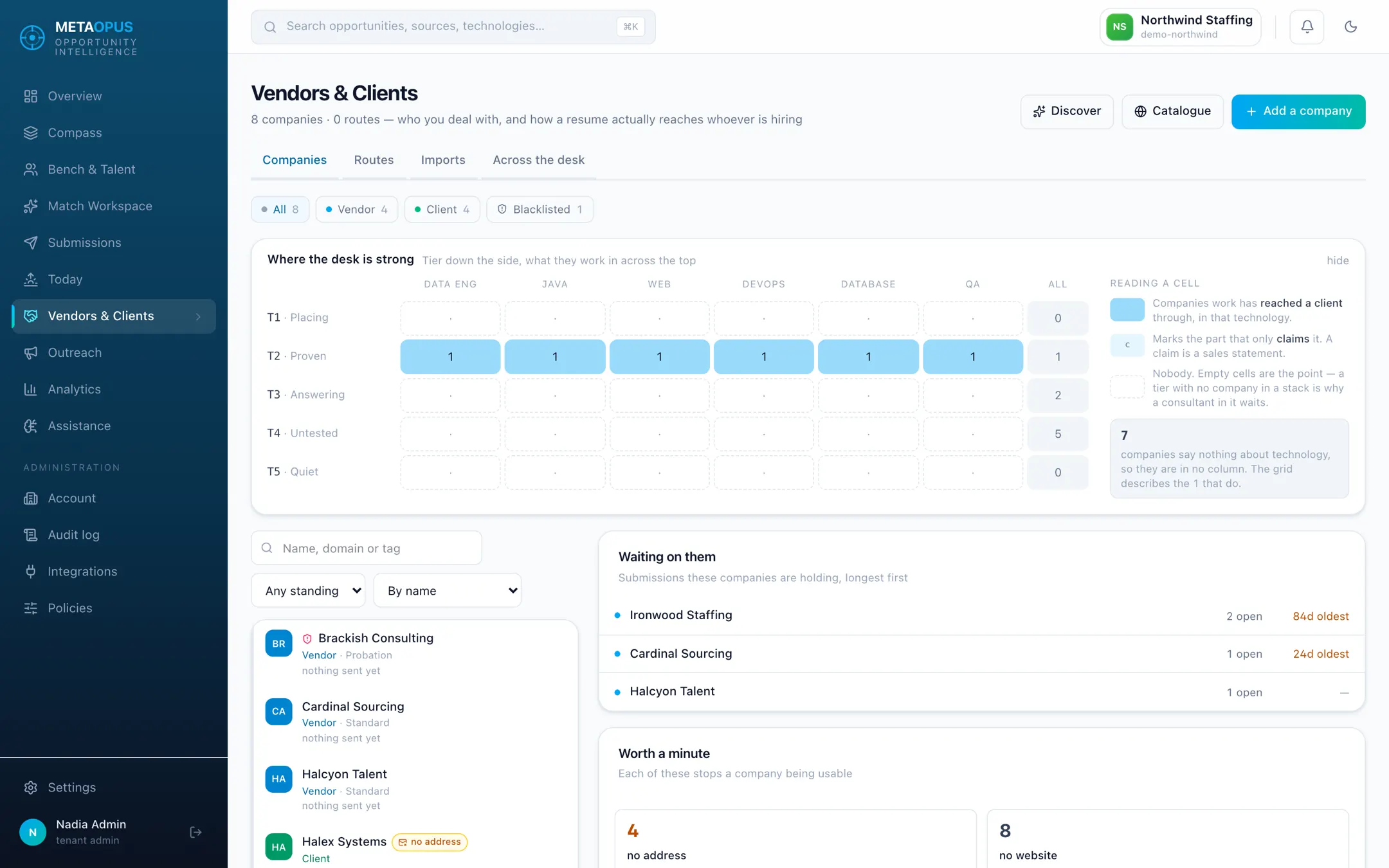
A submission has a vendor — the company we sent it through — and an end client, the company the role is actually for. Keeping them apart is what makes it possible to ask which vendors convert, rather than which companies were involved.
What a company's record holds
- Its people, and the addresses they write from.
- How quickly it usually answers, measured from its own history rather than assumed.
- What it has carried, and what any of it converted to.
A consultant sees the vendor and the client on a submission only once it has really been sent — not while it is still being assembled.
Frequently asked
Why separate the vendor from the end client?
So you can ask which vendors convert rather than which companies were involved. The vendor carried the submission; the client decided on it. Collapsing the two makes both questions unanswerable.
Where does a company's answering time come from?
Its own history with you — measured, not assumed. That is also what lateness is judged against, so a vendor who answers in hours and a vendor who never replies are not held to the same clock.
What does blacklisting a company do?
It blocks the route that runs through it, and says why at the point somebody tries to use it, rather than failing quietly later.
Was this helpful?
More in Vendors & clients
Still stuck? Tell us what you are trying to do — a person answers, and we would rather fix the product than explain it twice.