The submission stages
Ready, Sent, Progressing and Closed — what each means and what moves between them.
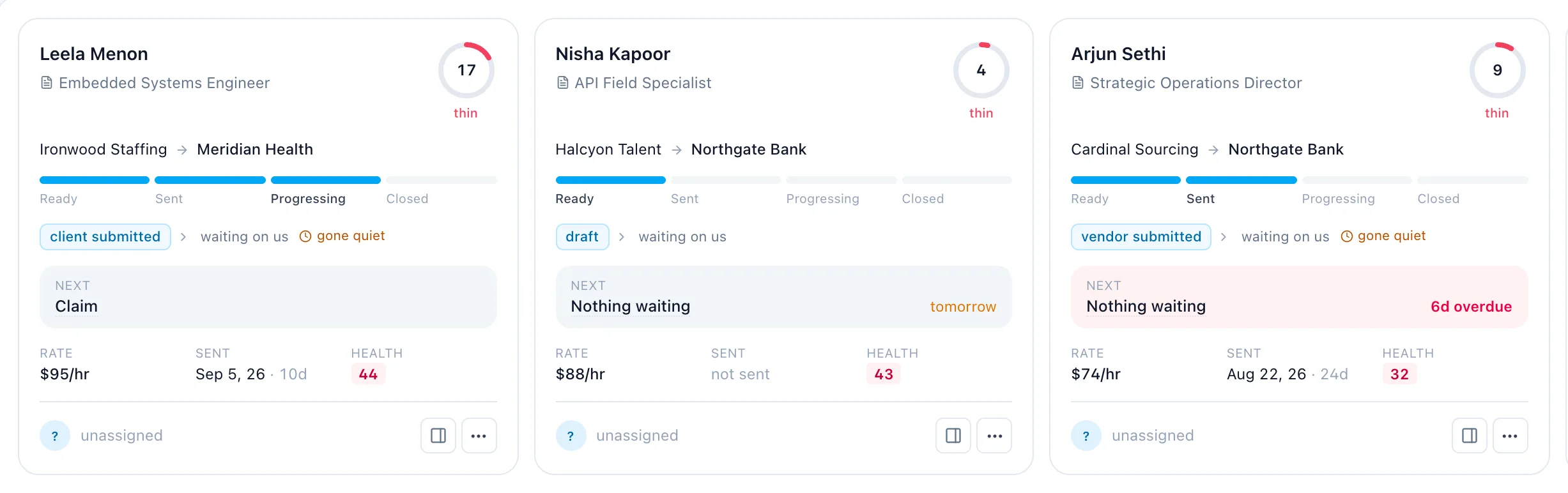
Open Submissions in MetaOpus- Ready — assembled and not sent. Everything it needs is on file; it is waiting on somebody here.
- Sent — with the vendor, not yet acknowledged. The commonest place for a submission to go quiet.
- Progressing — the vendor has passed it on and the client has it. Interviews and offers live here.
- Closed — placed, rejected, withdrawn, or aged out with no reply.
Changing a status
Press the status on the row and pick where it moves to. A reason is required, and it goes on the timeline against your name — which is what makes the history worth reading a month later.
The board arranges the same submissions by who is holding them up rather than by stage. Closed submissions never appear there: a placement is not stuck.
Frequently asked
Can I add a stage of my own?
No. The four stages are what every other part of the product counts on — analytics, the board, what is late — and a desk-specific fifth would mean nothing to any of them. What you can add is your own status wording inside a stage.
What happens to a submission that is never answered?
It ages out into Closed with no reply recorded as the reason. It is kept rather than deleted, because the next approach to that vendor starts better informed.
Does moving a stage tell the vendor anything?
No. A stage change is your record of where something stands. Nothing leaves MetaOpus unless you send it.
Was this helpful?
More in Submissions
- Next action, waiting on, and what is late Where the next step comes from, who is holding a submission, and what turns red.
- Chasing what is owed One sitting that clears a morning of follow-ups, grouped by who you are chasing.
- Likelihood and health scores What thin, fair and strong mean, and why every score opens its reasons.
- Building a submission Consultant first, then the route, then the rate — and what the vendor actually receives.
- Interviews, offers and starts Why an acceptance is tied to one version, and why a start is a separate act.
- Today: your morning list What is owed this morning, grouped by where it came from, in the order it has to happen.
Still stuck? Tell us what you are trying to do — a person answers, and we would rather fix the product than explain it twice.